
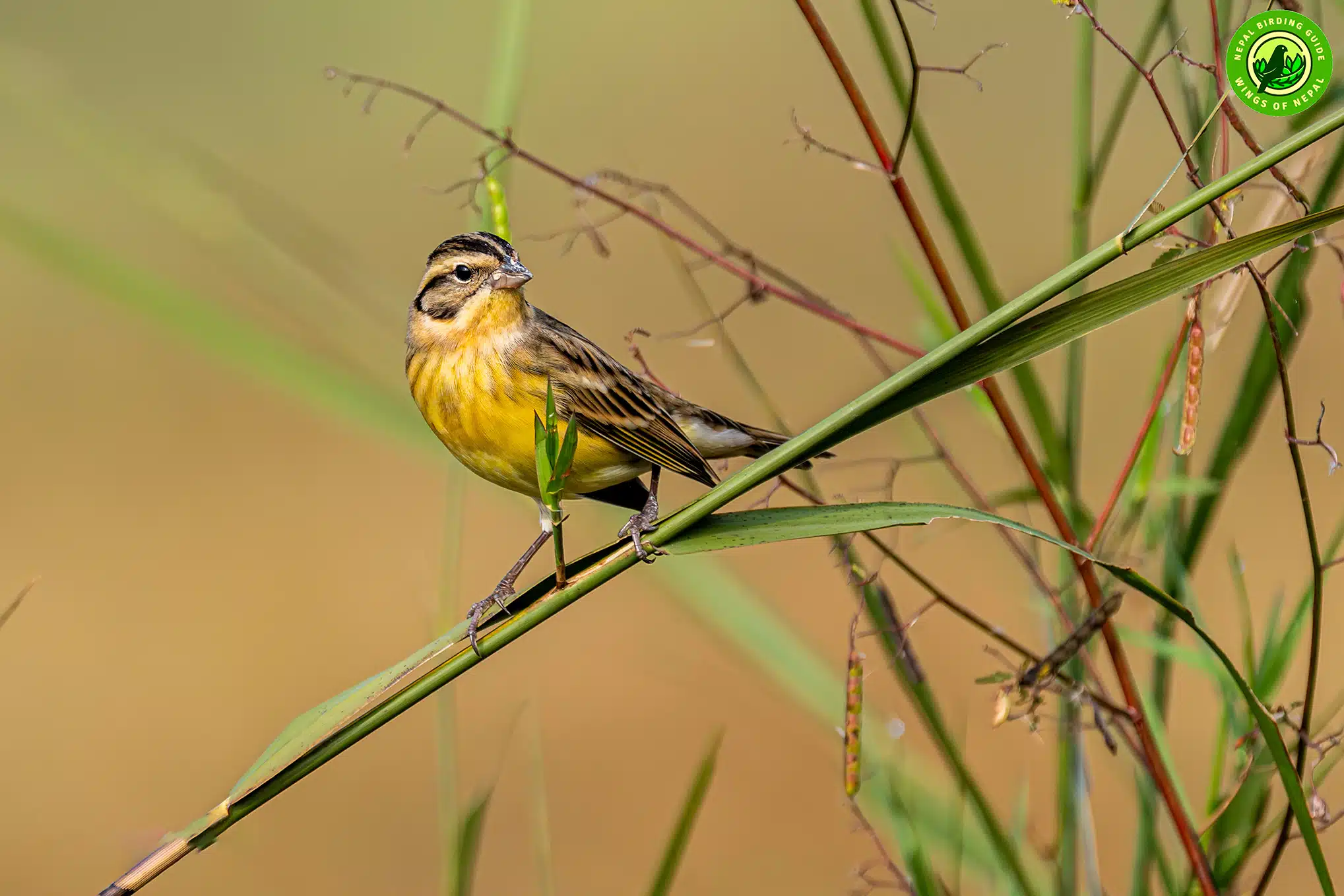
Yellow-breasted Bunting – Migratory Birds in Nepal
Birdwatching in Nepal, Among the many fascinating migratory birds that visit Nepal every year, the Yellow-breasted Bunting (Emberiza aureola) stands out as a tiny jewel of color and song. Once considered one of the most abundant passerines across Eurasia, this bird has suffered a dramatic population decline in recent decades, earning its current status as Critically Endangered on the IUCN Red List.
Yet, Nepal remains one of the key countries where this remarkable species can still be seen during migration. Birdwatchers and conservationists are drawn to the beauty, rarity, and conservation story of the Yellow-breasted Bunting in Nepal—a bird that tells a powerful tale of both loss and hope.
A Brief Overview of the Yellow-breasted Bunting
The Yellow-breasted Bunting is a small, sparrow-like bird belonging to the Emberizidae family. It is around 13–15 cm in length and is easily recognized by its bright yellow underparts, chestnut-brown upperparts, and striking black head (in breeding males). Females and non-breeding males are less colorful but still show the distinct yellow wash on their belly and breast that gives the bird its name.
The species breeds in northern Eurasia, stretching from Finland and Siberia all the way to parts of northern China. During the harsh winters, they migrate southwards to warmer regions across South Nepal. That’s when birders in Nepal get a chance to witness their fleeting presence.
Migration Route and Seasonal Movement

The Yellow-breasted Bunting migration is one of the great natural journeys of the avian world. The birds travel thousands of kilometers each year, moving from breeding grounds in northern Europe and Asia to wintering areas in South Asia, including Nepal, India, Bangladesh, Myanmar, and Thailand.
In Nepal, these buntings are mainly winter visitors and passage migrants, observed between October and March. They are typically found in lowland areas, especially in the Terai region and around Kathmandu Valley’s wetlands and farmlands.
Their preferred habitats during migration include paddy fields, grasslands, riverbanks, and reed beds—places rich in seeds and insects. The lush farmlands of Nepal provide an important stopover for refueling before the buntings continue their long journey further south.
Where to See Yellow-breasted Buntings in Nepal

Despite their declining numbers, Yellow-breasted Buntings can still be spotted in several regions of Nepal during their migration season. Some of the best-known birdwatching sites include:
- Koshi Tappu Wildlife Reserve
Located in eastern Nepal, this wetland sanctuary is famous for its waterbirds, but also serves as an excellent habitat for buntings. The reed beds and paddy fields around Koshi Barrage often host small flocks of Yellow-breasted Buntings during winter. - Chitwan National Park and Buffer Zones
In the grasslands and open farmland surrounding Chitwan, birders sometimes encounter these buntings feeding on the ground or perching on tall grasses. Early morning birding walks often yield sightings. - Lumbini Farmlands
The flat agricultural plains around Lumbini, the birthplace of Lord Buddha, attract a variety of wintering birds including buntings, pipits, and wagtails. - Kathmandu Valley (Manohara, Taudaha, Chobar, and Pharping areas)
Although less common than in the Terai, small groups are occasionally observed in the valley during passage migration. - Bardia and Suklaphanta National Parks
Western Nepal’s grasslands also host wintering buntings. Birdwatchers exploring these areas in November or December may get lucky sightings. - Yellow-breasted Bunting in Pokhara
Pokhara is not only famous for its lakes and mountain views—it’s also an excellent stopover site for migratory birds like the Yellow-breasted Bunting. During the winter months (November to February), small flocks are occasionally seen around paddy fields, grasslands, and lakeshore areas where there is plenty of grain and cover.
Some of the best areas to search include the rice fields around Pame and Hemja, the wetland edges near Khaste. Begnas and Rupa Lakes, and Dobilla dumping site, which attracts many seed-eating species. Early morning birding offers the best chance to spot them as they feed quietly on the ground or perch on grass stems.
Patience and gentle observation often reward you with a glimpse of the Yellow-breasted Bunting—a rare winter migrant that adds a bright flash of yellow to Pokhara’s serene landscapes.
Behavior and Feeding Habits
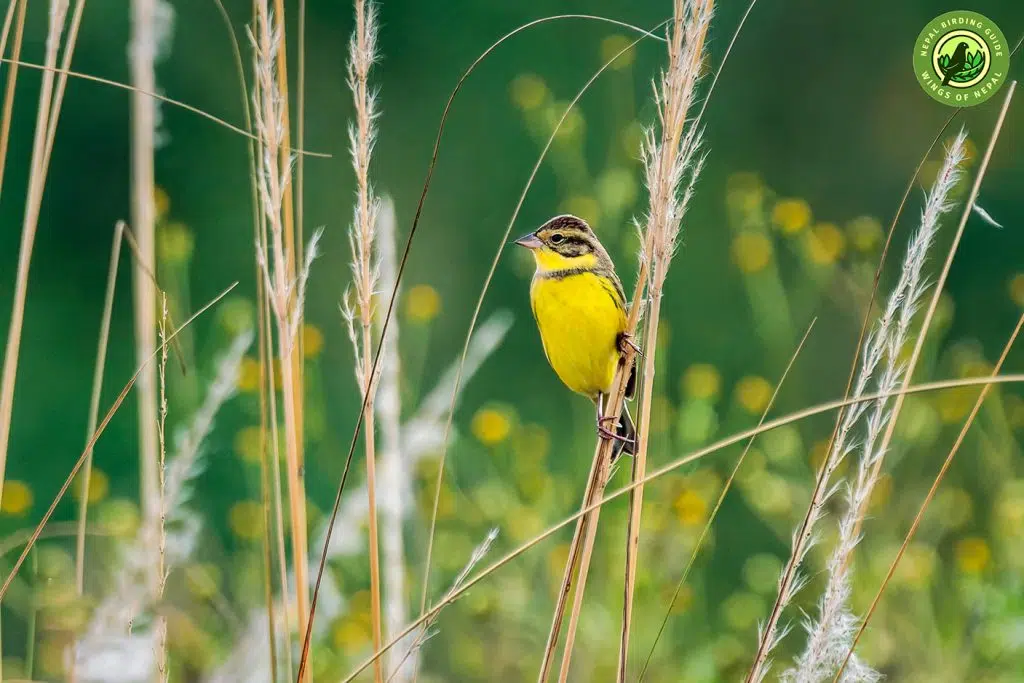
The Yellow-breasted Bunting is typically seen in small flocks, sometimes mixed with other buntings like the Black-faced Bunting or Little Bunting. They prefer open habitats where they can forage for seeds, grains, and small insects.
In winter, their diet mainly consists of grass seeds and leftover grains in harvested rice fields—making agricultural landscapes particularly important for their survival.
Their feeding behavior is often low and inconspicuous. They hop along the ground, picking seeds one by one, occasionally flying to nearby shrubs or reeds to perch. During migration, they conserve energy by keeping activity minimal and foraging efficiently.
Vocalization and Song
During the breeding season, the male’s song is a pleasant, melodic series of whistles and trills, often delivered from an exposed perch. However, in Nepal, you’re more likely to hear their soft “tseep” calls as they move in small flocks during migration or while feeding quietly in fields.
To experienced birders, the call can be a useful clue to locate the species among other small brown birds that occupy similar habitats.
Conservation Status: From Abundance to Endangerment
The story of the Yellow-breasted Bunting is one of the most dramatic declines of any migratory bird in the world. Once widespread and abundant across Eurasia, the species has faced a catastrophic fall in numbers—by as much as 90% since the 1980s.
The main cause? Illegal trapping and hunting during migration and wintering seasons, especially in parts of China and Southeast Asia, where the bird was once trapped in huge numbers for food—known locally as the “rice bird.”
In addition, habitat loss, agricultural intensification, and pesticide use have further reduced their survival chances.
Recognizing the crisis, the IUCN upgraded the Yellow-breasted Bunting to Critically Endangered in 2017. Conservation organizations across Asia, including those in Nepal, are now working to protect remaining populations and stop illegal hunting along migration routes.
Role of Nepal in Bunting Conservation
Nepal plays a vital role in the survival of the Yellow-breasted Bunting because it lies directly along one of the bird’s major migratory corridors. The farmlands and wetlands of Nepal provide crucial stopover and wintering habitats.
Organizations such as Bird Conservation Nepal (BCN) and local birding groups have been actively monitoring migratory birds, documenting sightings, and raising awareness among farmers and communities about the importance of protecting these species.
The inclusion of the Yellow-breasted Bunting in national birdwatching checklists and biodiversity records also helps highlight its conservation importance. Promoting eco-friendly farming and minimizing pesticide use in key habitats can make a big difference.
Why the Yellow-breasted Bunting Matters

Every bird species has an ecological role, and the Yellow-breasted Bunting is no exception. As a seed-eating bird, it helps with seed dispersal and ecosystem balance in farmlands and grasslands. Its migration connects ecosystems across continents—from the tundras of Siberia to the wetlands of Nepal—illustrating the interconnectedness of our planet’s biodiversity.
Moreover, the plight of the Yellow-breasted Bunting serves as a symbol of conservation awareness. Its dramatic decline warns us about the wider threats facing migratory birds—loss of habitat, climate change, and unsustainable human practices.
Birdwatching Tips: How to Spot the Yellow-breasted Bunting in Nepal
For bird photographers and enthusiasts eager to observe or photograph this rare migrant, here are some practical tips:
- Best Season:
November to February is the ideal time to spot them in Nepal. - Time of Day:
Early morning or late afternoon, when birds are active and lighting is best for photography. - Habitat to Search:
Focus on paddy fields after harvest, grasslands, and reed beds near wetlands. - Equipment:
A binocular or spotting scope is essential for identification. A telephoto lens (400mm or more) is recommended for photography. - Approach Quietly:
The birds are shy and easily flushed. Observe from a distance to avoid disturbance.
Documenting sightings and sharing them with local birding communities helps track the species and supports conservation efforts.
Cultural and Emotional Connection
In many Asian cultures, buntings—especially the Yellow-breasted Bunting—were once celebrated as signs of luck and prosperity. Unfortunately, these beliefs also contributed to their decline, as they were trapped in massive numbers. Today, a shift is taking place: instead of consumption, the bird is increasingly seen as a symbol of resilience and beauty.
For Nepali birdwatchers, spotting a Yellow-breasted Bunting feels like a precious reward—a glimpse of a bird fighting for survival, yet continuing its ancient migratory journey year after year.
The Future of Yellow-breasted Bunting in Nepal

There’s still hope for the Yellow-breasted Bunting. Conservation measures, international cooperation, and awareness campaigns are beginning to make a difference. The banning of large-scale trapping in several Asian countries, coupled with monitoring efforts by ornithologists, gives reason for optimism.
In Nepal, continued support for wetland and farmland conservation, community-based bird tourism, and education initiatives can ensure these birds continue to find safe havens along their migration route.
Birdwatchers can also contribute by reporting sightings, promoting ethical photography, and spreading awareness about migratory bird protection.
Conclusion
The Yellow-breasted Bunting is more than just a colorful migrant passing through Nepal—it’s a story of connection, resilience, and the delicate balance between humans and nature. Once widespread across continents, now critically endangered, it reminds us of how swiftly abundance can turn into scarcity if we fail to protect the natural world.
Every winter, as flocks of buntings arrive in Nepal’s fields and wetlands, they bring with them a message: that conservation is not just about saving birds—it’s about preserving the beauty and harmony of life on Earth.
For birders in Nepal, spotting the Yellow-breasted Bunting is both a thrill and a responsibility—to ensure that future generations can still witness the golden flash of this remarkable traveler.


