
Common Crane (Grus grus): The Majestic Winter Visitor of Chitwan, Nepal
The arrival of winter in Nepal brings more than crisp mornings, misty riverbanks, and clear Himalayan views—it also ushers in the long-distance migration of countless birds traveling thousands of kilometers along the Central Asian Flyway. Among these seasonal visitors, one species continues to captivate birdwatchers and nature lovers with its elegance and grace: the Common Crane (Grus grus). Although considered a regular winter visitor to Nepal, its appearance in places like the Dibyanagar farmlands of Chitwan is still a special moment for many bird watchers and wildlife enthusiasts.
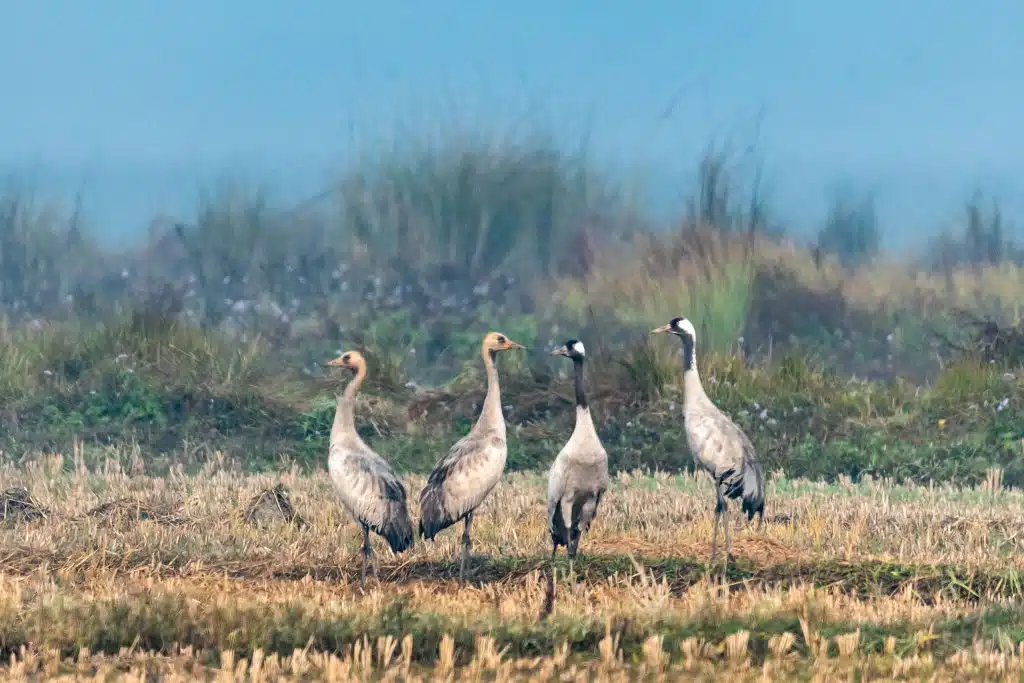
However, there is a growing sadness behind this beauty. Each year, fewer cranes seem to arrive. Last winter, 13 individuals were recorded in the Dibyanagar area. But this year, the season’s first arrival brought only 3 cranes, a worrying reminder of the challenges migratory birds face across their vast journey. Their declining numbers highlight the urgent need for habitat protection, peaceful farmlands, safe flyways, and greater conservation awareness—so that future winters in Chitwan continue to echo with the haunting calls and graceful flight of the Common Crane, a species increasingly threatened by the loss and degradation of its natural habitats.
A Glimpse of Elegance: Recognizing the Common Crane
The Common Crane is one of the world’s most widespread crane species, known for its tall and dignified posture. Adults typically stand around 120 centimeters tall, giving them a commanding presence whether they’re striding across open fields or taking off with slow, powerful wingbeats.
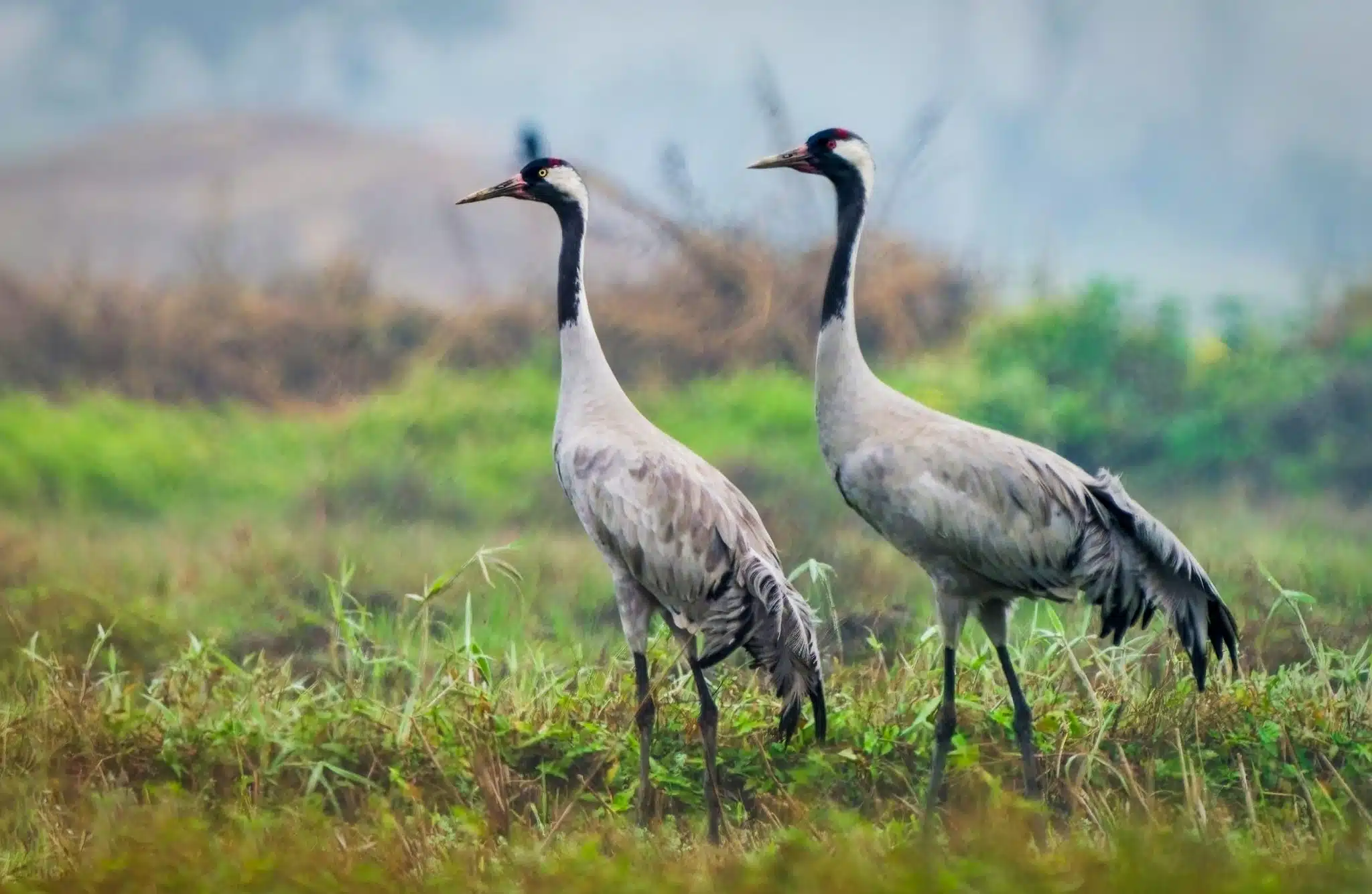
Their plumage is predominantly soft grey, a color that blends beautifully with winter landscapes. But what truly captures attention are the details:
- The long, slender neck that swings gracefully as they walk or forage
- Distinctive black facial markings, giving their face sharp contrast
- A bright red crown patch, a glowing spot on the top of the head that adds a touch of royal charm
These features make the Common Crane instantly recognizable, even from a distance. Their calls—loud, trumpeting, and resonant—carry far across open habitats, adding an ancient, haunting quality to the winter air.
Migration: Traveling the Central Asian Flyway
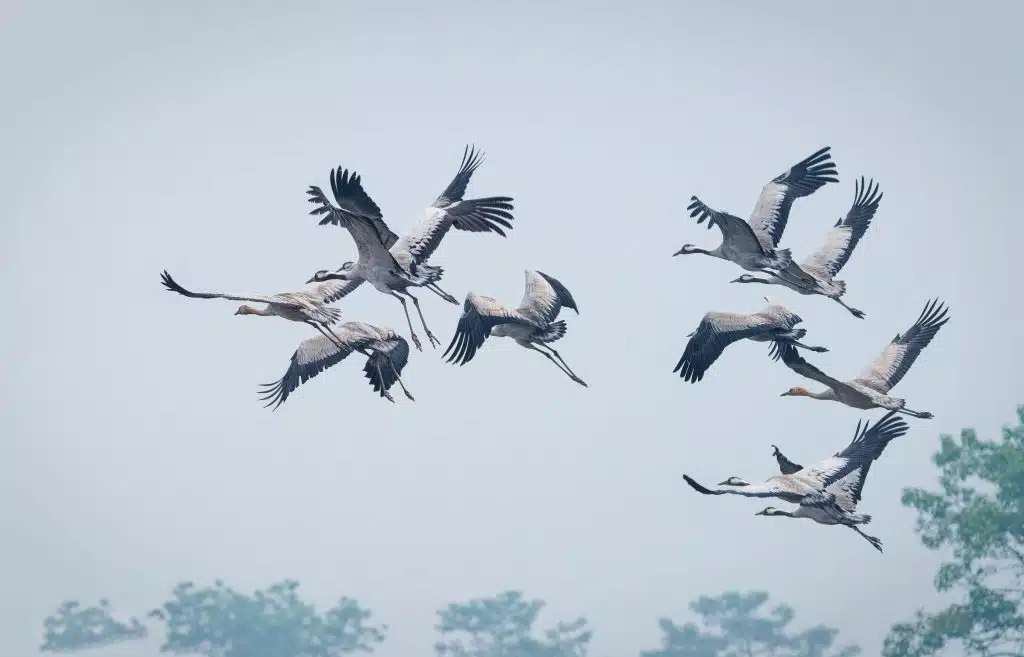
The journey of the Common Crane is one of endurance and adaptation. Breeding mainly in northern Europe and Asia, these cranes migrate southward as temperatures drop. Their route along the Central Asian Flyway takes them over varied landscapes: Siberian wetlands, Central Asian steppes, Himalayan foothills, and finally into India.
Nepal lies along the periphery of this flyway, so the cranes do not appear in large numbers here. Instead, their occurrence is occasional, almost surprise-like. For birders in Nepal, especially those exploring Chitwan, spotting a Common Crane feels like witnessing a special guest making a brief but graceful visit.
Why Chitwan? Understanding Their Seasonal Presence
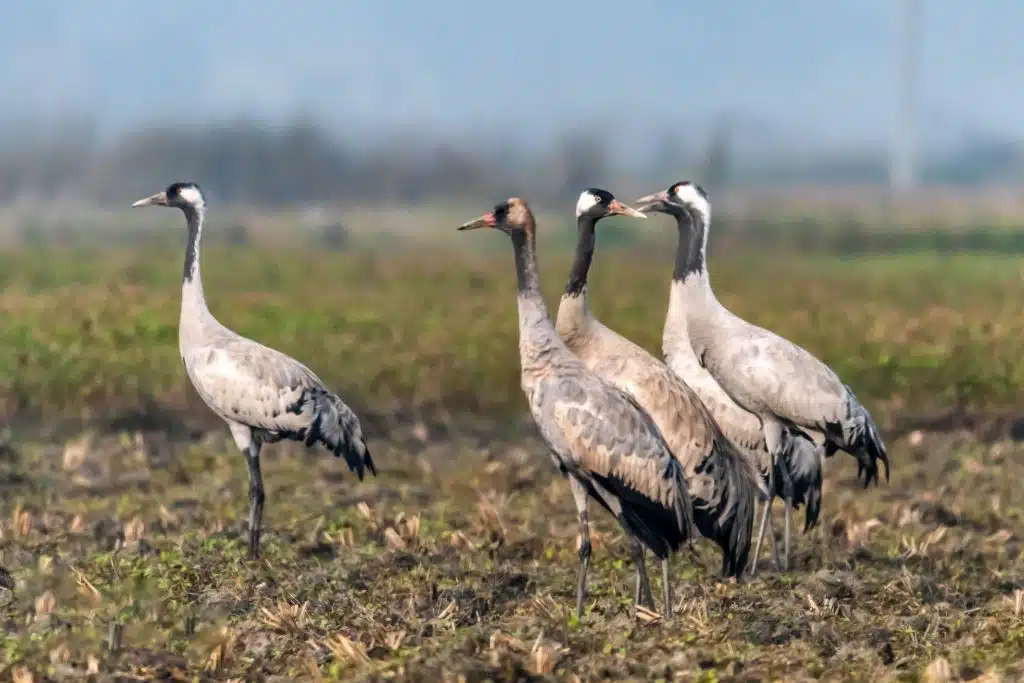
Chitwan, with its expansive floodplains, oxbow lakes, open riverbanks, and agricultural fields, offers a welcoming refuge for wintering birds. For cranes, these landscapes provide:
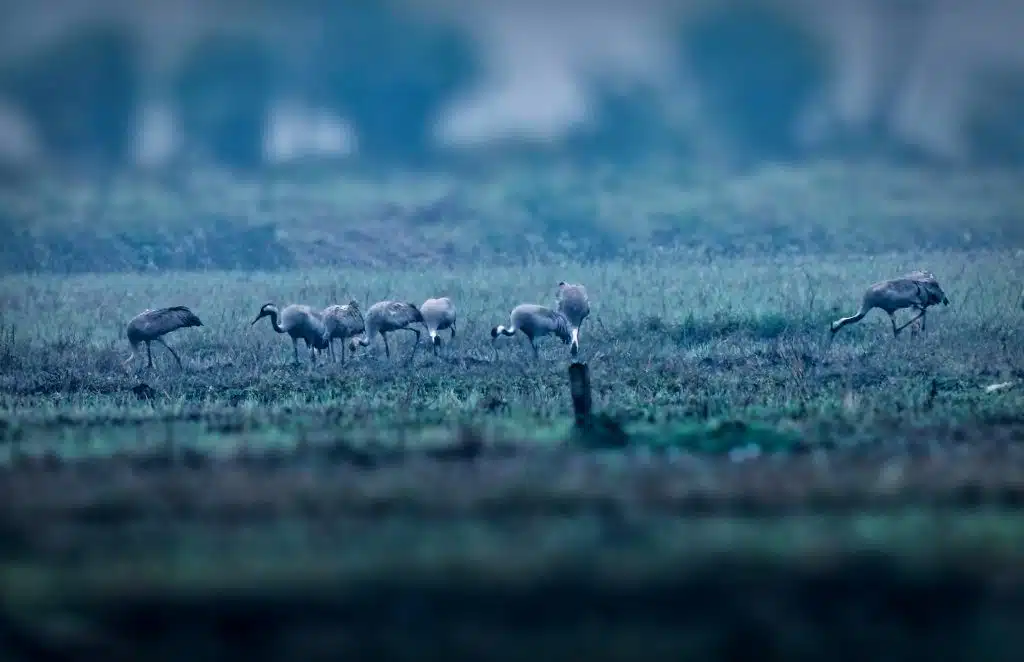
- Foraging grounds with grains, seeds, tubers, insects, and small vertebrates
- Shallow wetlands suitable for resting
- Open areas where visibility is clear—important for detecting predators
While the Common Crane is not a routine migrant to Nepal, when individuals or small groups do appear, Chitwan is one of the most suitable stopover spots. In some winters, observers have recorded small flocks wandering along the Rapti River or feeding in harvested paddy fields on the park’s outskirts.
Behavior: What Makes the Common Crane So Mesmerizing
Crane behavior is fascinating, and even a short encounter in Chitwan can reveal some delightful traits:
1. Courtship Displays
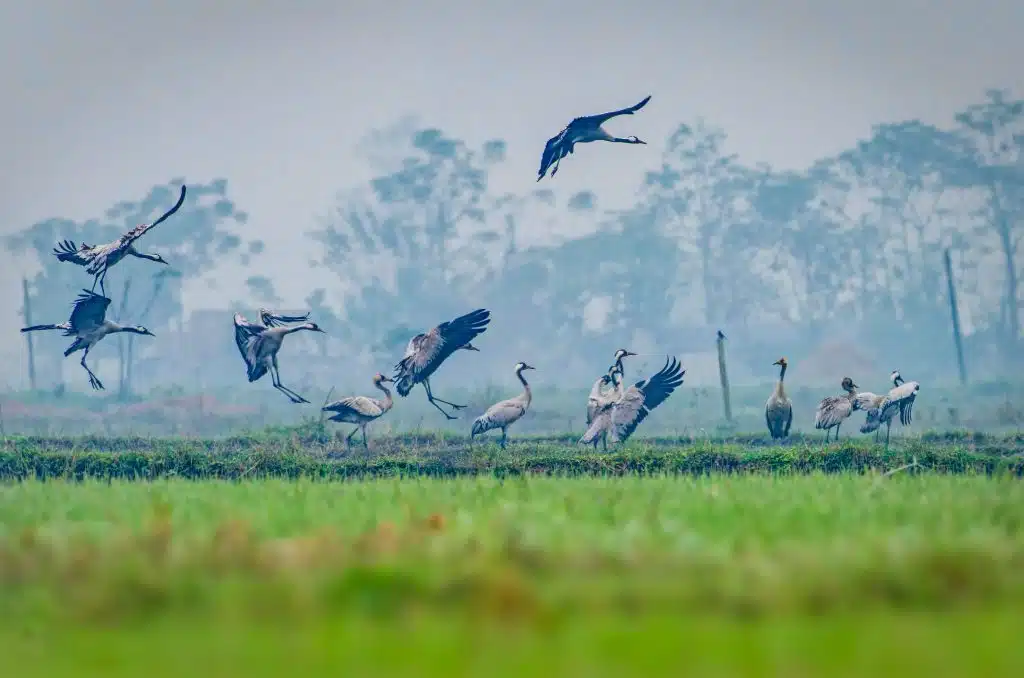
Even during winter, cranes may engage in limited courtship movements. Their dances—leaping, bowing, tossing vegetation—are both beautiful and symbolic. Watching cranes dance feels like witnessing a natural performance choreographed by instinct and tradition.
2. Strong Family Bonds
Common Cranes form life-long pair bonds. Adults migrate together, often accompanied by juveniles. When seen in the fields of Dibyanagar Chitwan, they typically remain close, feeding side by side and maintaining soft contact calls.
3. Highly Social Yet Cautious
Outside the breeding season, cranes prefer to stay in open flocks, using their height to keep watch for danger. Though they are large birds, they remain surprisingly wary and sensitive to disturbance, often taking flight if approached too closely.
4. Majestic Flight
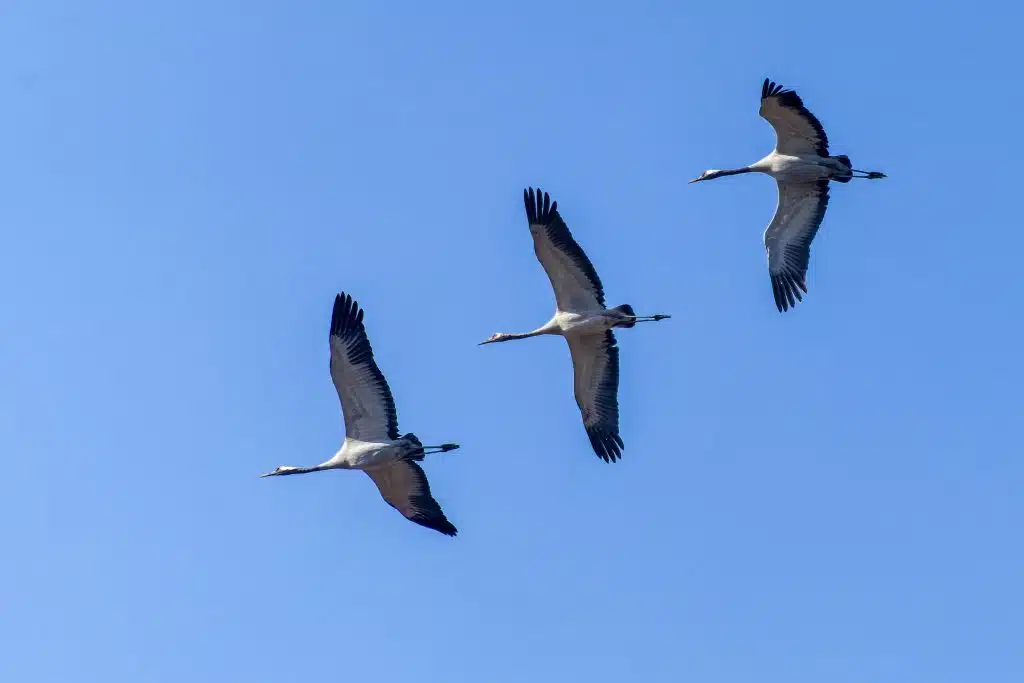
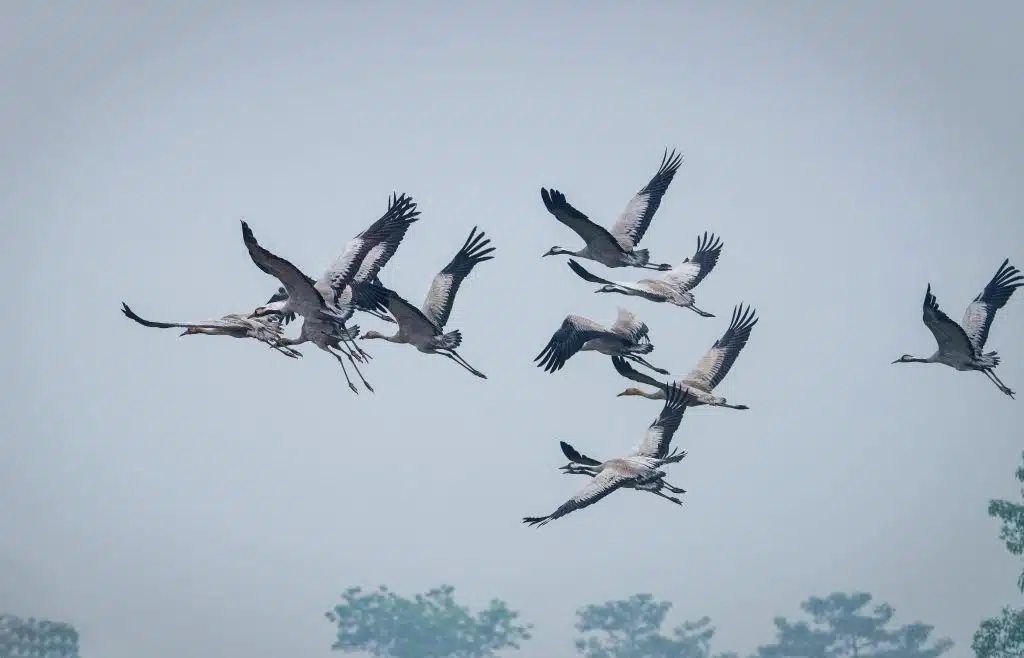
Perhaps the most breathtaking sight is when cranes take off. With wingspans stretching up to 2.4 meters, they lift into the sky with slow, deliberate wingbeats. Their silhouettes against the winter sky create a moment that linger in memory long after the birds vanish into the distance.
Ecological Importance of Their Visits
Even though they appear only occasionally, the presence of Common Cranes in Nepal is important for several reasons:
- Indicator of healthy wetland ecosystems
Their arrival signals that local wetlands and agricultural landscapes remain productive and undisturbed enough to support large migratory birds. - Contribution to biodiversity
Every visiting species enriches Nepal’s avian diversity, placing the country firmly on the map for global bird migration studies. - Cultural and educational value
Cranes hold symbolic significance in many cultures, often associated with peace, longevity, and harmony. Their presence inspires conservation awareness among local communities and tourists.
Threats to the Common Crane
Across its range, the Common Crane faces several conservation challenges:
- Habitat loss due to agricultural expansion, wetland drainage, and development
- Disturbance from human activities, especially in resting and feeding areas
- Collisions with power lines during migration
- Poisoning and pollution in agricultural fields
Although globally the species remains of “Least Concern,” these threats highlight the importance of protecting stopover sites—even those used only occasionally, like those in Nepal.
Best Places and Times to Spot Them in Chitwan
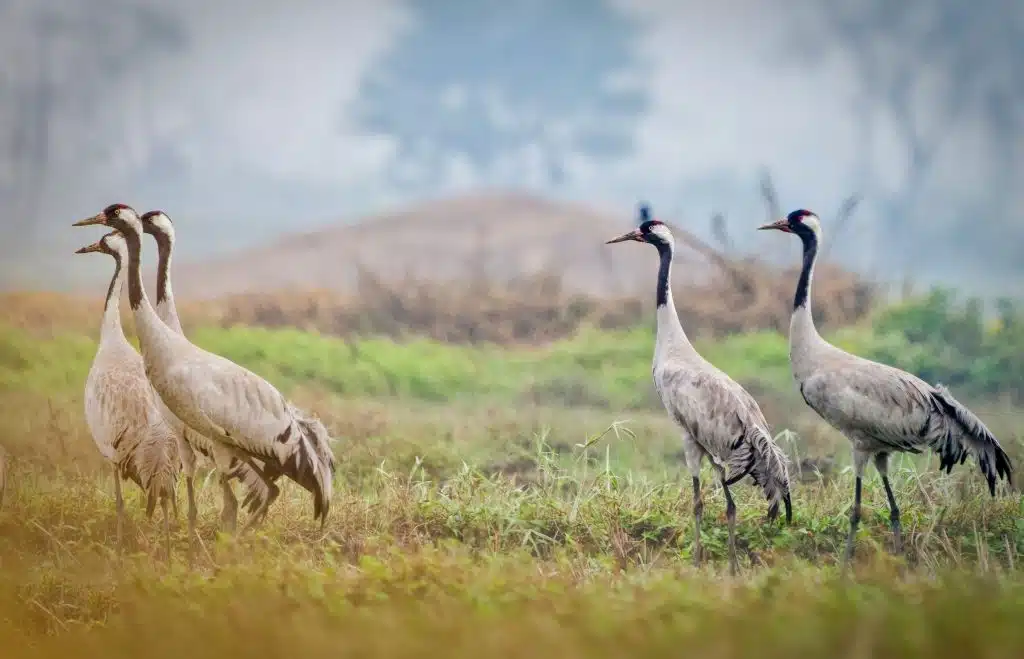
While sightings are never guaranteed, birdwatchers have the best chances in:
- Open riverbeds along the Rapti and Narayani rivers
- Wet grasslands near park boundaries
- Harvested paddy fields in Dibyanagar
- Shallow wetlands around Bishazari Lake or Jagatpur
December to February is the most likely window, though some occasional sightings occur slightly earlier or later depending on weather patterns along the flyway.
Tips for Observing Common Cranes Respectfully
If you are hoping to see these magnificent birds during your winter trip to Chitwan:
- Use binoculars or a spotting scope to avoid approaching too closely.
- Stay quiet and patient, as cranes are easily disturbed.
- Visit early morning or late afternoon, when they are most active.
- Avoid blocking their feeding or flight paths by sticking to designated trails and open viewpoints.
- Report sightings, which helps researchers understand their migration trends in Nepal.
A Rare but Remarkable Visitor
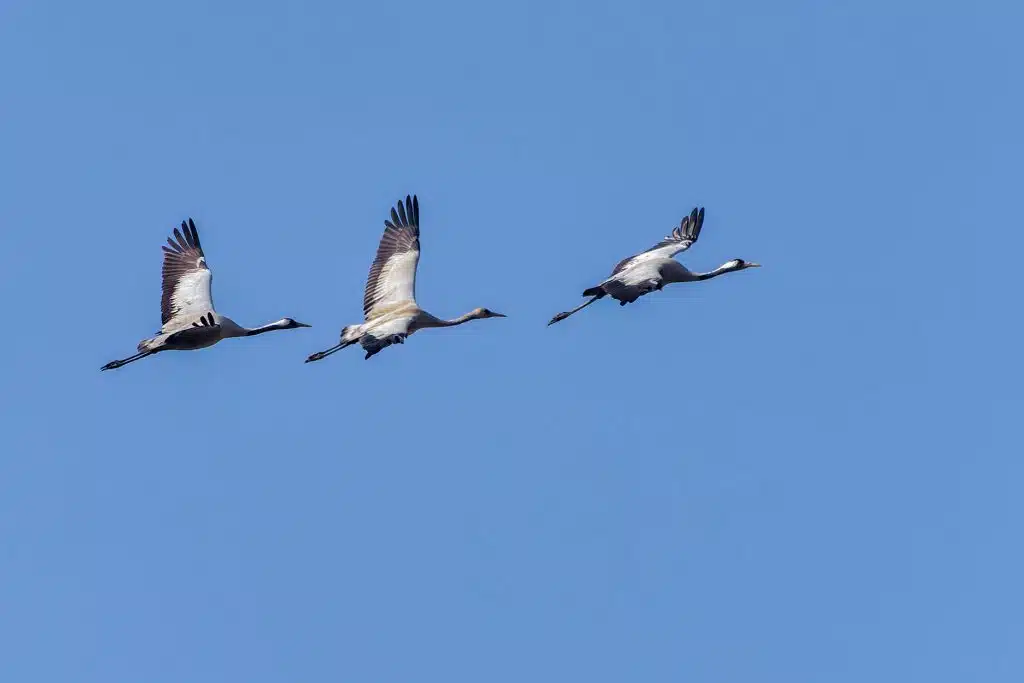
The Common Crane may not be a regular migrant to Nepal, but its occasional arrival transforms ordinary landscapes into scenes of wild elegance. Whether seen flying gracefully above the Rapti floodplain or feeding quietly in winter fields, this bird brings a sense of ancient migratory rhythm to Chitwan’s already rich natural tapestry.
For bird lovers, its presence is a reminder of the interconnectedness of continents, climates, and ecosystems. For Nepal, it is a symbol of the country’s importance as part of Asia’s vast and vital migratory network.
If you are exploring Chitwan this winter, keep your binoculars ready—you may be fortunate enough to witness the silent dignity and breathtaking beauty of the Common Crane, a true winter jewel of Nepal’s birdlife. At Nepal Birding Tour, we always encourage birdwatchers to share their target species. If you have any dream birds in mind, please contact us—we’ll design a rewarding and memorable holiday to help you find them


